
Introduction
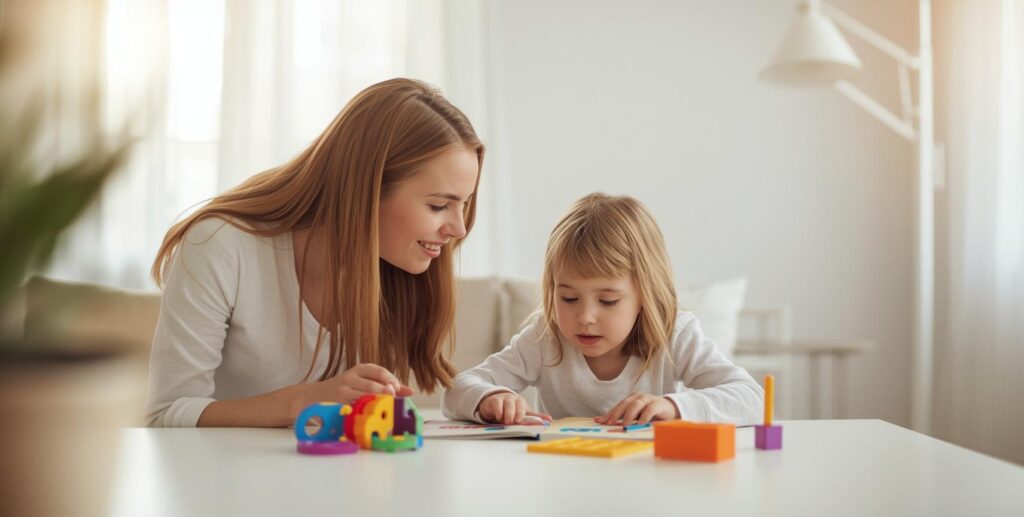
Helping your child learn to talk can feel overwhelming—especially if you’re worried about delays and don’t have immediate access to therapy. The good news is this: you play the most powerful role in your child’s speech development. Long before any professional steps in, children learn communication through everyday interactions at home.
This guide will walk you through practical, proven, and natural ways to encourage speech development—all without formal therapy. These are not quick fixes, but consistent strategies that build real, lasting progress.
Understanding Why Some Children Talk Later
Before jumping into solutions, it’s important to understand something reassuring: children develop at different speeds.
Some common reasons for delayed speech include:
- Limited interaction or conversation exposure
- Personality differences (some children observe more before speaking)
- Hearing challenges
- Developmental differences (like autism or learning delays)
- Bilingual environments (temporary delay, not a disorder)
What matters most is not panic—but consistent support and intentional communication.
Why Home Is the Best Place to Build Speech
Children don’t learn language from pressure—they learn it from connection.
At home, your child feels:
- Safe to try and fail
- Comfortable making sounds and gestures
- Motivated to communicate needs and emotions
This natural environment is actually more powerful than structured sessions when used correctly.
1. Turn Everyday Moments Into Talking Opportunities
You don’t need special tools—you need intentional interaction.
How to do it:
Talk through your day as if you’re narrating a story.
Instead of:
- “Sit down.”
Try:
- “Let’s sit on the chair. Sit down. Good job sitting!”
During routine activities:
- Bath time → “Water… splash… wash your hands”
- Eating → “Apple… bite… yum!”
- Dressing → “Shirt on… arm in… pull!”
Why this works:
Children learn speech through repetition + context. When they hear words tied to actions, they begin to understand and eventually imitate.
2. Speak Less… But More Effectively
It sounds strange, but talking too much can overwhelm a child who is still learning.
Use the “Rule of 3”:
Keep sentences short:
- “Want juice?”
- “Open door?”
- “More food?”
Then pause and wait.
Why this matters:
Children need time to:
- Process what they heard
- Attempt a response (even if it’s just a sound)
Silence is not failure—it’s thinking time.
3. Follow Your Child’s Lead (Not the Other Way Around)
Instead of directing play, join your child’s world.
If your child is playing with a car:
- Don’t switch to a puzzle
- Sit down and say: “Car… vroom vroom!”
If they stack blocks:
- “Up… up… fall down!”
Why this works:
Children are more likely to communicate when:
- They’re interested
- They feel understood
- The activity is enjoyable
Speech grows fastest in engaged, playful moments.
4. Repeat, Expand, and Model Speech
When your child makes any sound or attempt, build on it.
Example:
Child: “Ba”
You: “Ball! Big ball!”
Child: “Ju”
You: “Juice! Want juice?”
This technique is called expansion, and it:
- Reinforces correct words
- Shows how language is formed
- Encourages imitation naturally
Avoid correcting harshly. Instead of:
- “No, say it properly”
Use:
- “Yes! Ball! That’s a ball!”
5. Use Books as a Speech Tool (Not Just Reading)
Books are powerful—but only if used interactively.
How to do it:
- Point at pictures: “Dog… woof woof!”
- Ask simple questions: “Where’s the cat?”
- Let your child point instead of speak at first
Pro tip:
Don’t rush through the story. It’s not about finishing—it’s about engaging.
6. Use Songs, Sounds, and Repetition
Music is one of the easiest ways to trigger speech.
Start with:
- Simple songs with actions
- Repetitive sounds (“ba ba ba”, “la la la”)
Examples:
- Clap hands songs
- Animal sound songs
- Call-and-response songs
Why this works:
Songs:
- Reduce pressure
- Improve memory
- Encourage imitation through rhythm
Many children will sing before they speak clearly—and that’s a good sign.
7. Limit Passive Screen Time
Screens are not evil—but passive watching slows speech development.
Why?
Children learn language through:
- Interaction
- Facial expressions
- Real-time responses
Screens don’t respond back.
Better alternative:
If using screens:
- Watch together
- Talk about what’s happening
- Pause and ask questions
8. Encourage Communication—Not Just Words
Speech is only one form of communication.
If your child:
- Points
- Gestures
- Makes sounds
That’s progress.
Encourage it by:
- Responding immediately
- Naming what they want
- Celebrating attempts
Example: Child points at water →
You say: “Water! You want water!”
This builds the bridge from gestures to words.
9. Create Small “Opportunities to Talk”
Sometimes, don’t give your child everything instantly.
Example:
- Hold the juice and wait
- Look expectantly
Your child may:
- Reach
- Make a sound
- Attempt a word
That’s your cue to respond and model language.
10. Be Patient—Progress Takes Time
Speech development is not a straight line.
Some days:
- Your child may say more
Other days: - They may be quiet
This is normal.
Focus on:
- Small improvements
- Consistency
- Encouragement
Avoid comparing your child to others—it often creates unnecessary stress.
When to Consider Extra Support
While many children improve with home support, you should seek help if your child:
- Doesn’t respond to sounds or name
- Has no babbling by 12 months
- Uses very few or no words by 2 years
- Stops using words they once had
Early support doesn’t mean something is “wrong”—it simply gives your child more tools to succeed.
Key Points: Your Voice Matters Most
You don’t need expensive programs or constant therapy to help your child talk.
What your child truly needs is:
- Your time
- Your attention
- Your patience
- Your interaction
Every word you say, every response you give, every moment you connect—builds your child’s communication skills.
Progress may feel slow, but it is happening.
And often, the biggest breakthroughs come from the simplest things:
- A shared smile
- A repeated word
- A moment of connection
Quick Recap
- Talk during everyday routines
- Use simple, clear language
- Follow your child’s interests
- Expand on their sounds
- Use songs and play
- Encourage all forms of communication
- Be patient and consistent